

Translations are automatic (Google Translate) and may contain errors. English is the original.
WHAT IS BIPOLAR DISORDER (also known as BD)?
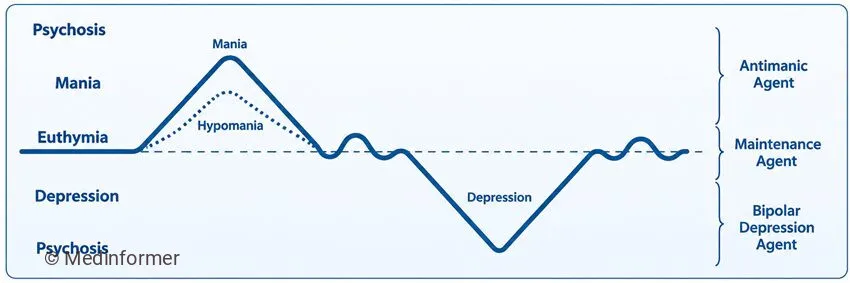
Furthermore, there are two types of Bipolar disorder. Bipolar 1 disorder affects men and women equally, while bipolar 2 is more common in women. 2 BIPOLAR 1 DISORDER: One or more episodes of mania with or without major depressive episodes. 2, 3 BIPOLAR 2 DISORDER: One or more episodes of hypomania (less elevated mood) as well as at least one major depressive episode. 2, 3 It also presents with shorter bouts of depression than bipolar 1. 4 Additionally, anxiety, substance use/dependence, and personality disorders are common to both. 4
SYMPTOMS OF “HIGHS” (MANIA)
- An elevated or irritable mood which is often cheerful and joking but is unstable. There can also be extreme irritability and hostility
- Overabundant energy and activity and rapid, pressured speech
- A rush of ideas
- Impulsive and inappropriate behaviour
- Grandiose delusions (e.g. delusions of inventive genius or aristocratic birth)
- Overoptimistic about one’s abilities
- Severe insomnia
SYMPTOMS OF “LOWS”
- Depressed mood
- Lack of interest or pleasure
- Change in appetite
- Insomnia/hypersomnia
- Excessive guilt feelings
- Ideas or acts of self-harm or suicide
- Reduced self-esteem and self-confidence
- Reduced concentration and attention
PHASES OF BIPOLAR DISORDER
WHO DOES BIPOLAR DISORDER AFFECT?
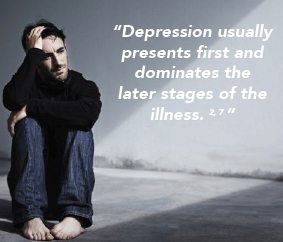
The first symptoms of BD often present at 15 to 19 years of age. 2 There is often a family history of bipolar disorder, bullying at school and attempts of suicide/self-harm. 5
MEN 7
- Early onset bd is often associated with manic episodes
- Higher probability of childhood antisocial behaviour
- Higher rates of comorbid alcohol abuse/dependence
- Cannabis abuse/dependence
- Pathological gambling
WOMEN 7
- More depressive episodes
- Higher rates of comorbid eating disorders
- Weight change
- Insomnia
HOW DOES IT IMPACT QUALITY OF LIFE?
Bipolar disorder impacts quality of life in the following ways:
- Affects work functioning and is responsible for loss of productivity and increased illness and absenteeism. In fact, 72% of bipolar patients receive disability payments.1
- BD is associated with increased substance use/dependence and the excessive use of alcohol and smoking. 1, 5
- It Increases the likelihood of having other psychiatric and medical conditions. 1
- It Increases the risk of suicide, especially during major depressive episodes. 8
CAN SPECIALISTS TREAT BIPOLAR DISORDER?
Yes, Effective treatment is certainly available for BD. However, despite advances in medical and non-medical treatments, BD often has many relapses and affects psychological functioning. 7
Long-term treatment is aimed at preventing manic and depressive episodes. Specialists strongly recommend Long-term treatment because even after one episode, the chances of having recurrences in a lifetime is 95%. 6 Therefore, treatment of BD is often lifelong, and treatment specialists need to review the condition at least every six months. 2

Print, download or find out more
Medical references

This page is for general information and isn't a substitute for advice from a doctor who knows your history. If you're worried about your health, speak to your GP. In an emergency, call 10177, or 112 from a mobile.