

Translations are automatic (Google Translate) and may contain errors. English is the original.
WHAT IS HRT?
Hormone replacement therapy is medications used to replace female hormones (oestrogen and progesterone) that are depleted in the body and are no longer produced by the body during menopause. 2, 3
HRT should generally be started before the age of 60 and within ten years of menopause for maximum benefit – if it is clearly indicated and personal risk factors have been considered, HRT can be in the form of cream or gels, vaginal rings, tablets and skin patches. 1
INDICATIONS FOR HRT
- Treatment of menopause symptoms.
- To prevent osteoporosis in older women (>55 years) and bone loss in women with premature menopause (<40 years).
- Symptoms which indicate urogenital atrophy.
CONTRAINDICATIONS
- History of thromboembolism.
- Thrombophilia (conditions that affect the normal balance of coagulation factors in the blood, with a risk of forming blood clots.).
- History of chronic heart disease or stroke.
- Current or history of breast, endometrial or other oestrogen dependent cancers.
- Liver disease.
- Undiagnosed cause of persistent urinary tract bleeding.
- Hypertension that is untreated.
- Porphyria.
- Severe migraines.
COMPLICATIONS
- Heart disease.
- Stroke.
- Blood clots.
- Breast cancer.
SIDE EFFECTS OF HRT
- Breast tenderness.
- Breakthrough bleeding.
- Bloating.
- Nausea.
LIFESTYLE CHANGES WHEN ON HRT
- Sensation of smoking.
- Eating a healthy balanced diet
- Managing stress
- managing chronic conditions you may have such as high cholesterol, blood pressure, diabetes, thyroid disorders
- Cessation of smoking
- Limit the alcohol that you consume.
- Wearing loose clothing.

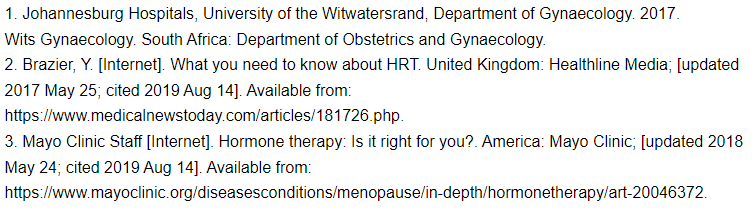
Medical references

This page is for general information and isn't a substitute for advice from a doctor who knows your history. If you're worried about your health, speak to your GP. In an emergency, call 10177, or 112 from a mobile.