

Translations are automatic (Google Translate) and may contain errors. English is the original.
WHAT IS HEPATITIS B?
Hepatitis B is a viral infection that attacks the liver, putting people at high risk of death due to Liver Cirrhosis (liver damage) and liver cancer.2
Hepatitis B infection is caused by the hepatitis B virus (HBV).2,3
This virus is spread, the same way as HIV; through contact with the blood, semen, or other body fluids of a person infected with Hepatitis B. When a person is infected with both HIV and HBV, this is called “HIV/HBV co-infection” and they should be treated for both infections.3
HBV can be a short-term (acute) or long-term (chronic) illness and without treatment, chronic HBV can cause liver cancer or liver damage that leads to liver failure.3
DID YOU KNOW?
Hepatitis B infection is unusual in children because children are vaccinated against Hepatitis B.1
SIGNS AND SYMPTOMS
For those who do have symptoms, the following may be noticed:
- Loss of appetite
- Tiredness
- Nausea or vomiting
- Fever
- Stomach pain
- Dark urine
- Joint pain
- Yellowing of the skin or whites of the eyes (jaundice)
Most people with chronic HBV don’t show any symptoms for years. As liver functions are tested routinely in persons with HIV on ARVs, this may be the first sign of chronic HBV infection.3
MANAGEMENT OF HEPATITIS B CO-INFECTION
HIV/HBV co-infected people progress faster to liver damage than those with HBV infection only.1
Treatment
Chronic HBV is treated with antiviral medicines. The medicines work to help limit damage to the liver.3
People with HIV/HBV co-infection should be treated for both infections. Some HIV medicines, such as tenofovir, are effective at treating both HIV and HBV.2,3
The medicines assist with slowing down progression to liver damage and improving long-term survival.2 Treatment does not cure HBV in most people, but suppresses the virus.2 The medicines should therefore be continued long-term, to keep the virus under control.2
A doctor will choose the best combination of medicines suitable for each patient.3
HEPATITIS B CAN BE PREVENTED!
All HIV-infected people or those at risk of being infected, including healthcare workers, should have an HBV vaccine.1,2
The following precautions should be taken to reduce the risk of contracting Hepatitis B:3
- Using condoms during sex
- Don’t inject drugs and re-use needles or syringes
- Don’t share razors, toothbrushes and other personal items that may come in contact with another person’s blood
- Ensure that all tattoo and body piercing instruments are sterile before use.
Speak to your doctor or pharmacist for further advice on your condition and the best treatment options for you.

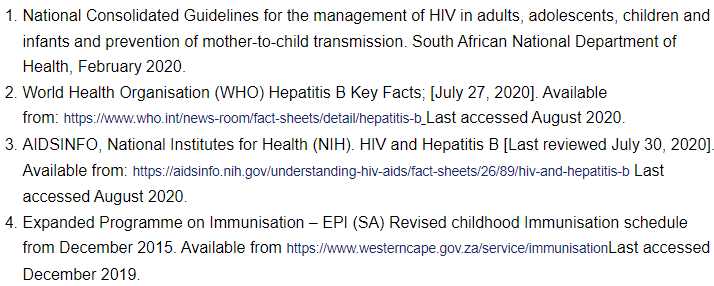
Medical references

This page is for general information and isn't a substitute for advice from a doctor who knows your history. If you're worried about your health, speak to your GP. In an emergency, call 10177, or 112 from a mobile.